
Prime power and standby power are not the same purchase
The single most common sizing mistake we see is treating a standby generator spec like a prime power spec. A standby set is built to run intermittently, during outages, for limited hours a year — it can be sized tighter and run harder for short periods. A prime power set is your primary source, running continuously or near-continuously, and needs to be sized with headroom for years of duty cycle, not a handful of outage hours.
Getting this backwards in either direction costs money: an over-specified standby set sits idle and depreciates for no operational benefit, while an under-specified prime set runs at the edge of its rating constantly, shortening service intervals and engine life.
Enclosure choice is a site decision, not a preference
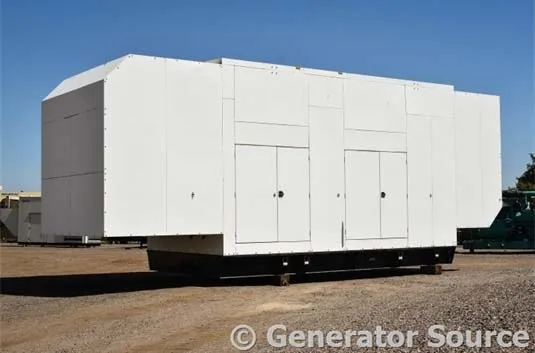
Open skid, weatherproof canopy, or fully containerized — the right enclosure depends on where the unit lives and who has access to it, not on budget alone. A containerized package makes sense for remote or unmanned sites where weather protection, noise attenuation, and physical security all need solving in one unit. An open skid only makes sense inside an existing powerhouse building.
The part that gets forgotten: switching and synchronization
A generator on its own doesn't keep a site powered through an outage — the automatic transfer switch does. ATS and synchronizing panels handle the actual failover: detecting the utility loss, starting the generator, and switching the load over without a human in the loop at 3am. On sites running multiple gensets in parallel, the synchronizing panel is what prevents two generators from fighting each other on the same bus.

This is the equipment category most often left as an afterthought in a generator quote — and the one most likely to determine whether an outage is invisible to your operation or a multi-hour scramble.
What we'd tell a buyer before they sign
- Confirm whether you need a prime or standby duty rating before comparing kVA numbers between quotes.
- Match enclosure type to the actual site — containerized isn't always the premium choice, it's sometimes the only workable one.
- Price the ATS and synchronizing panel as part of the generator project, not as a separate line item you'll get to later.
- Ask about remote monitoring if the site is unmanned or lightly staffed — a fault you don't know about isn't a fault you can respond to.